Hundreds of Kenyans and civil society activists took to the streets of Nairobi on Monday, June 1, in protest against the rising cases of femicide, violence against women, and the disappearance of children.
The majority women-led demonstration saw protesters stage a peaceful sit-down along Kenyatta Avenue, where they sang songs, waved banners, and chanted anti-femicide slogans. They urged the government to take urgent action, saying every life lost to femicide or infanticide reflects a failure of both society and the justice system.
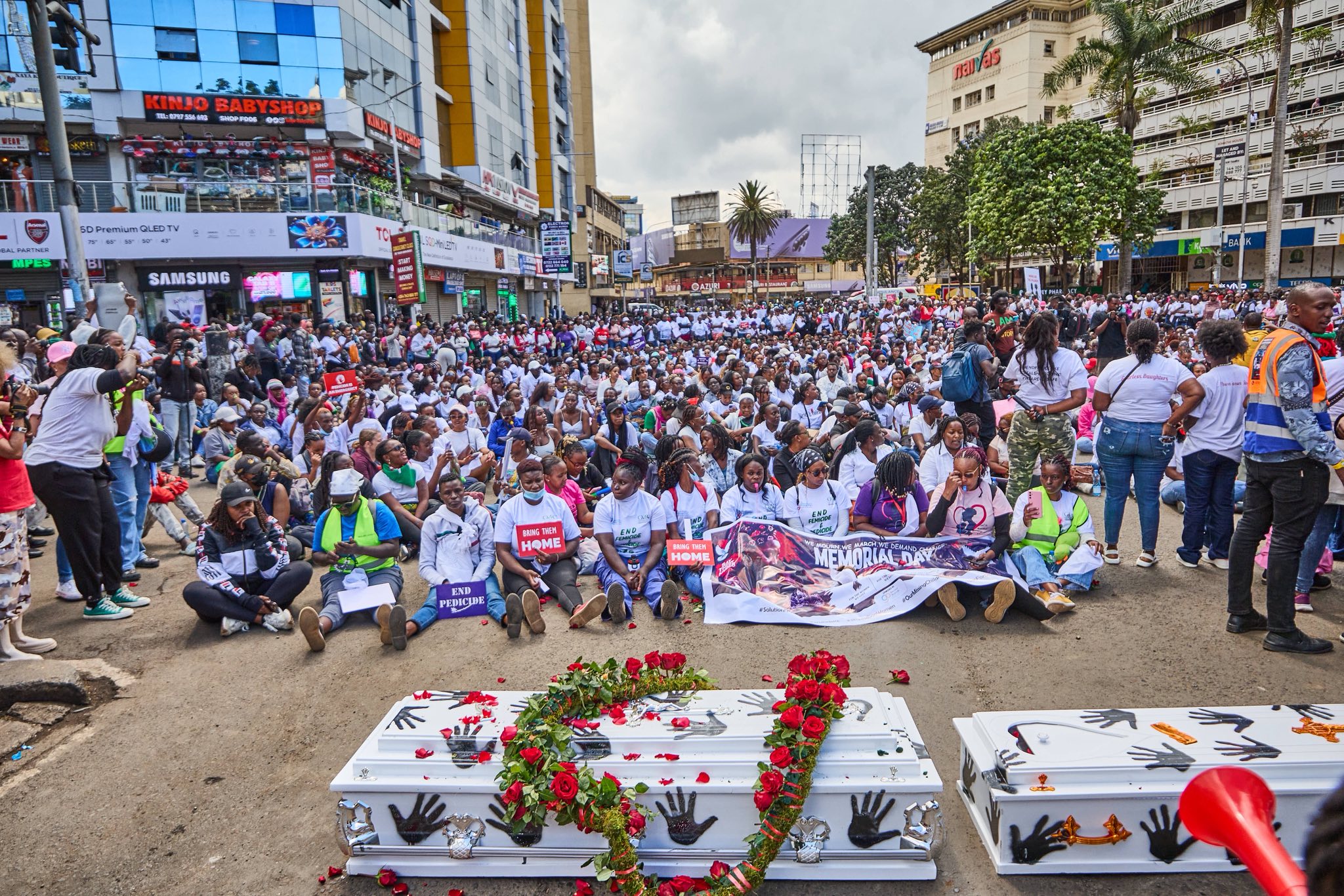
The protests come amid a disturbing rise in cases of women being killed, which activists described as a “mass burial”of victims. Participants wore white clothing as a symbol of peace and mourning.
Former Kenyan journalist and activist Janet Mbugua has reflected on Madaraka Day commemorations, highlighting a stark contrast between national celebrations and ongoing calls for justice.
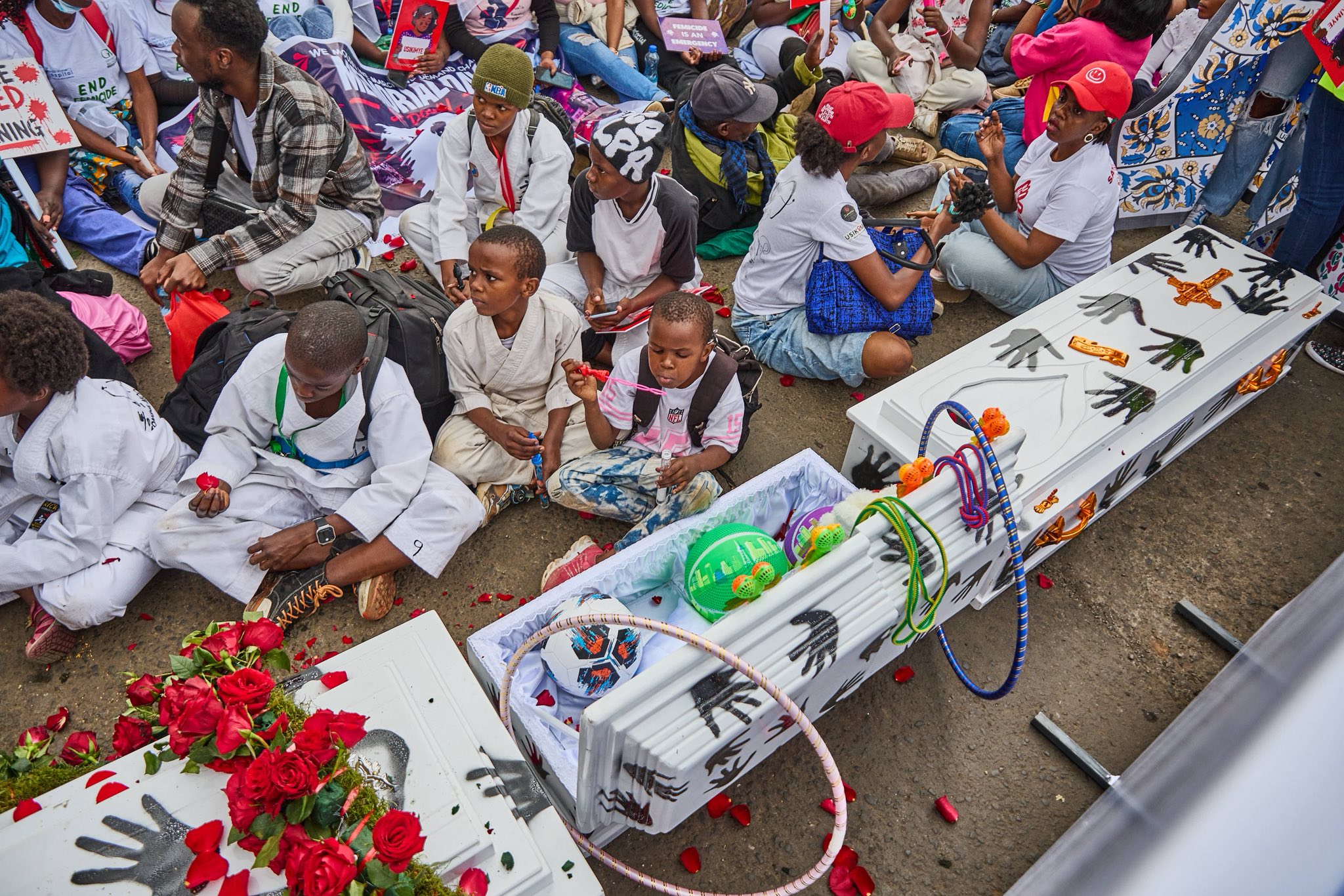
She noted that while the government marked 63 years of self-rule in Wajir, activists were on the streets holding coffins symbolizing women lost to femicide and toys representing missing children.
“While the government celebrated 63 years of self-rule in Wajir, we were in the streets with coffins for the women stolen from us, toys for the children we are still searching for and tears we have been carrying for too long. Madaraka is supposed to mean freedom. We are still waiting for it to mean that for everyone,” she stated.
She added that demonstrators also presented a set of demands, which she said would be shared publicly later.
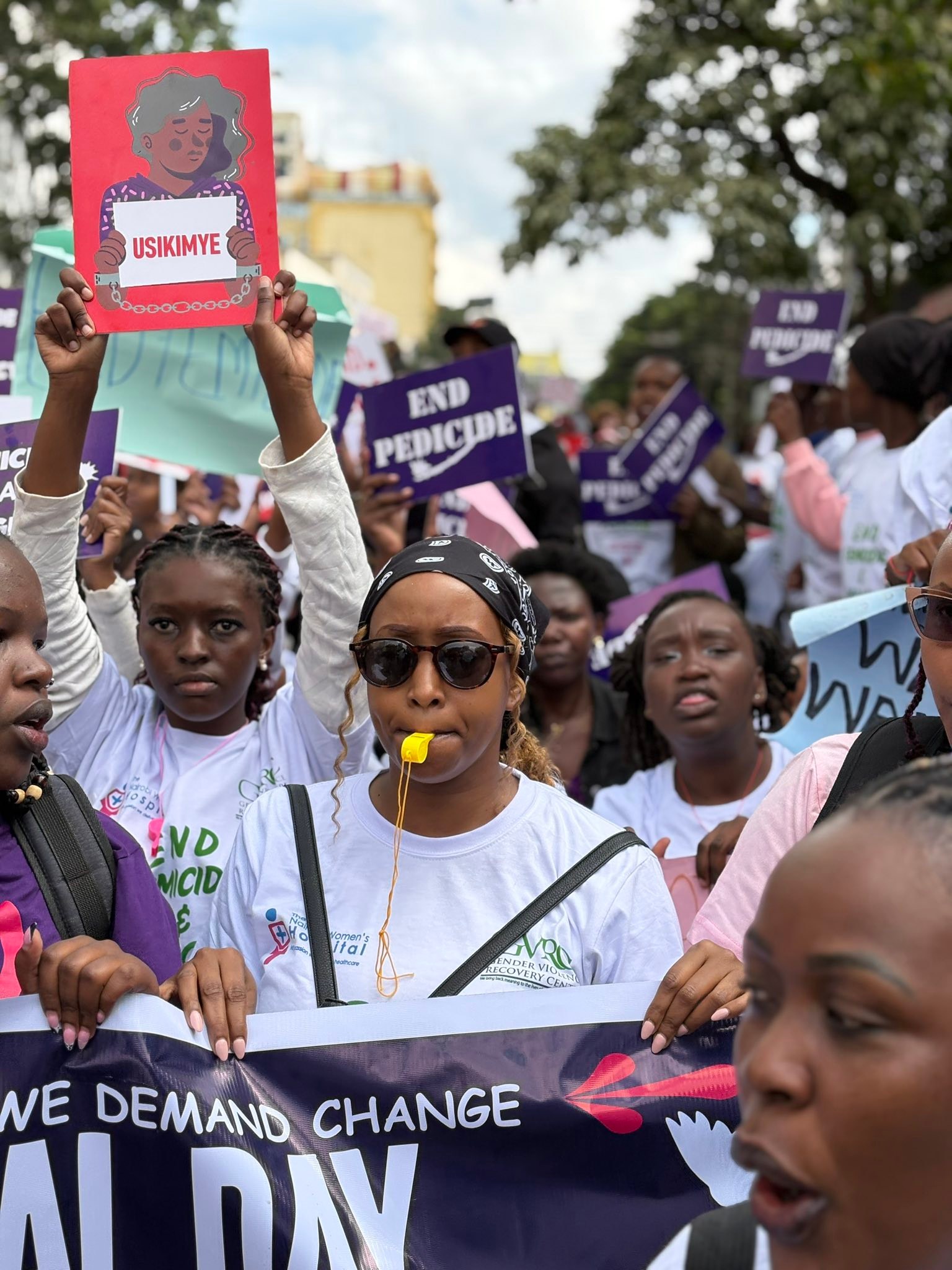
Activists expressed concern over the slow implementation of recommendations by the Presidential Technical Working Group on Gender-Based Violence (GBV), including femicide. The 43-member task force was appointed by President William Ruto last year to review legal frameworks, identify trends, and strengthen survivor support systems.
According to Usikimye Executive Director Njeri Migwi, at least 67 femicide cases have been documented since January this year. She noted that six months after the task force submitted its report, none of the recommendations have been implemented, and called for urgent government action. She also urged men to actively join efforts to end gender-based violence.
Law Society of Kenya Vice President Teresa Wawinia criticized the slow response to the crisis, calling for the establishment of gender desks in all police stations staffed with trained officers to handle GBV cases effectively.
Rachel Mwikali, coordinator of End Femicide, called for femicide to be declared a national crisis to unlock more resources and coordinated action. Activists also demanded stronger law enforcement, faster investigations, tougher sentencing, specialized courts for femicide and child trafficking cases, mandatory vetting for those working with children, and a sexual offenders register.
Former Chief Justice David Maraga joined the demonstrators, urging the state to take stronger action to end femicide and the disappearance of children.
Cabinet Secretary for Gender, Culture and Children’s Services Hannah Cheptumo, who had earlier raised concern over the rising cases of femicide and GBV, has called for strengthened protection systems, faster reporting, and enhanced enforcement measures. She also highlighted ongoing efforts with partners including the Kenya Red Cross and the National Gender and Equality Commission to expand safe houses, crisis centers, and rehabilitation services.
Activists maintained that sustained action, accountability, and full implementation of existing recommendations are urgently needed to address the escalating crisis.