The Catholic Diocese of Wukari has issued an urgent appeal for help following months of deadly attacks on Christian communities in Southern Taraba State, Nigeria. Church leaders report that since September 2025, suspected Fulani militants have carried out repeated assaults on rural villages, leaving more than 100 people dead, thousands injured, and over 90,000 Catholics displaced from their homes.
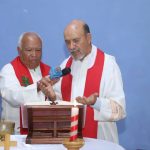
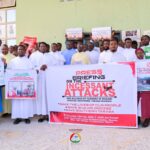
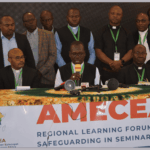
Speaking at a press conference held on February 12, 2026, at the Catholic Secretariat in Jalingo, diocesan officials described a crisis that has devastated farming communities in Chanchanji Ward of Takum Local Government Area, as well as parts of Ussa and Donga. Entire villages have reportedly been razed, along with more than 200 communities and churches. For many families, the violence has meant not only the loss of loved ones, but also the destruction of homes, farms, and livelihoods.
According to Church leaders, the attacks often follow a disturbing pattern. Armed men arrive in the early hours of the morning while residents are still asleep. Gunshots ring out, houses and churches are set ablaze, and food stores are destroyed. Survivors recount fleeing into nearby bushes to escape, leaving behind burning homes and the bodies of family members.
The most recent incident occurred on February 10 at about 5:30 a.m. in Mchia village, Chanchanji Ward, where more than 10 Christians were killed and several homes destroyed. Church authorities say such incidents are no longer isolated but form part of a sustained campaign targeting rural Christian populations.
Beyond the immediate toll of death and injury, the violence has created a severe humanitarian emergency. Many displaced families remain unable to return home. Some farms are said to have been taken over by the attackers, and those who attempt to harvest crops reportedly risk further assault. This has deepened food insecurity and left thousands dependent on aid for survival.
There are also troubling allegations of sexual violence against women who venture out in search of food. In some areas, roads have reportedly been blocked, with unsuspecting travelers attacked and killed. Church officials further claim that crops planted by displaced families are being harvested and used by the attackers, compounding the suffering of those already uprooted.
Diocesan leaders warn that the crisis threatens not only lives but also religious freedom and peaceful coexistence in the region. Priests’ residences and church buildings have been deliberately targeted in certain areas, raising concerns that the violence may be driven by more than criminal motives.
While acknowledging recent security efforts by the Taraba State Government in places such as Karim Lamido and along the Rafin Kada–Takum road, the Diocese insists that more decisive action is needed. Church leaders made several urgent requests to the government. They called for
- the immediate deployment of adequate security personnel to rural areas where attacks are still ongoing.
- They urged authorities to swiftly arrest and prosecute those responsible for the violence, regardless of their ethnic, political, or religious background.
- The Diocese also appealed for comprehensive humanitarian assistance for displaced families, including food, medical care, bedding, sanitation supplies, and temporary shelter, to prevent the crisis from worsening.
In addition, Church leaders are calling for honest and open dialogue among traditional rulers, religious leaders, security agencies, and political authorities to foster lasting peace in Southern Taraba.
The situation in Southern Taraba reflects a broader pattern of violence in Nigeria’s Middle Belt, where farming communities have faced recurring attacks. Human rights observers have repeatedly cautioned that weak enforcement and limited accountability contribute to the cycle of insecurity.
Despite the destruction and displacement, the faithful in Wukari Diocese continue to hold onto hope. Church leaders affirm their commitment to prayer, peaceful advocacy, and collaboration with authorities. They maintain that justice, effective security, and genuine dialogue remain essential steps toward restoring stability and protecting vulnerable communities in Southern Taraba.