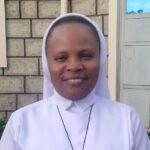
The Comboni Lay Missionaries in Kitelakapel, West Pokot (Kenya), serve in a harsh yet beautiful region marked by limited resources, and deep cultural traditions. Their work focuses on education, healthcare, pastoral outreach, and community empowerment especially supporting youth, women, and people with disabilities. Despite many challenges, they continue to build hope, foster dignity, while trusting in God’s providence and the power of solidarity.
By Linda Micheletti
The sun stands still over the dry, thorny plains of Kitelakapel, a remote area nestled in the heart of West Pokot, Kenya. This is a land of contrasts harsh, yet strikingly beautiful. Here, goats and cows roam freely on dusty paths, sharing the roads with a few scattered passers-by. Life moves slowly, rhythmically, under the blazing sun. Every now and then, two people meet under the thin shade of an acacia tree, exchanging a friendly “Poghisio-nyi?” a Pokot greeting meaning “Hi” or “How are you?” It’s a small sign of community and connection amid the challenges of this rugged terrain. Thank God that March and April bring with them the region’s only rainy season; a season of renewal, where the parched earth drinks deeply and the land momentarily blooms. People quickly seize the opportunity to farm, grow maize, beans, and vegetables, and gather food supplies that will hopefully sustain them through the long dry months ahead.
Our Mission: Walking with the People of Kitelakapel
If you continue up the road from the local center, you’ll find the home of the Comboni Lay Missionaries, a small but vibrant community living and working among the Pokot people. What brings us here? Quite simply: love andvocation. We are here to live out the vision of Saint Daniel Comboni, who dreamed of a missionary family; consecratedand lay, reaching the most remote and neglected places of the world. While cities like Nairobi boast robot waiters and smart technology, places like Kitelakapel remain far behind, struggling even to access clean water and basic healthcare. But we have been welcomed here with open arms, and this land, once unfamiliar, has become our home.Our current community is made up of Marzena Gibek from Poland, a physiotherapist; Pius Oyoma from Uganda, a teacher and pastoral worker; and Linda Micheletti from Italy, also involved in education and youth ministry. Recently, we were joined by Belinda Awino, a lay missionary from Kenya, preparing for her mission in Peru. Others will be joining us soon, from both Kenya and Poland, bringing new energy and gifts to this mission. We arrived in Kitelakapel in October 2022, and since then, we’ve dedicated ourselves to serving in the fields of education, healthcare, pastoral ministry, and community empowerment.
Challenges on the Ground: Life at the Margins
The challenges here are many and deeply rooted. Clean water is scarce, health services are insufficient, and hunger is a daily reality for many. Malnutrition among children is widespread, and job opportunities are almost non-existent. Sadly, what is not lacking is the easy availability of cheap alcohol and drugs, which only worsens the cycle of poverty and despair. Education remains a relatively new value among the Pokot community. Many families practice polygamy, and early marriages especially for girls are still common. These realities lead to school dropouts and a high rate of teenage pregnancies. Many children are sent away to boarding schools from a very young age, separating them from their families and cultural roots. Without adequate support, these students face immense challenges: peer pressure, gender inequality, body image issues, emotional isolation, and sexual exploitation. Girls often seek financial help from older boys or men in exchange for favours, simply to afford basic school supplies or hygiene products. Culturally, the use of physical punishment remains widespread by parents, teachers, and even spouses. This fosters fear and silence, especially among children and women. Confidence and self-expression are rare, and the role of women in leadership and community decisions is still minimal. In addition, the area suffers from high rates of addiction, HIV, and other sexually transmitted infections, which go largely untreated due to
What We Do: A Mission of Service, Hope, and Healing
In response to these complex realities, our work takes many forms, guided by a simple goal: to serve, to accompany, and to empower.
Education: Building Character and Confidence
Pius and Linda focus on Life Skills education in three local secondary schools: St. Bakhita (Kacheliba), Holy Trinity (Serewo), and St. Paul’s (Kitelakapel). These are schools for both boys and girls, and the Life Skills curriculum addresses vital themes: personal development, emotional management, conflict resolution, sexuality, relationships, addictions, peer pressure, self-esteem, and goal setting. We aim to help these students discover who they are, who they want to be, and how to live with purpose and dignity. We believe education must go beyond academics, it must form strong, conscious individuals ready to lead and thrive, even in the face of adversity.

Healthcare: Serving the Body and Soul
Marzena, a dedicated physiotherapist, works with children recovering from disabilities or injuries, but her work quickly expanded. Today, she is one of the most trusted health workers in the area. People come to her with a wide range of medical needs—from back pain to emergencies. She also assists pregnant women at the Kacheliba dispensary and runs developmental activities for children at the Kitelakapel nursery every week.
Pastoral Work: Sharing Faith and Building Community
Our pastoral ministry is both diverse and vibrant. We teach catechism and Sunday school, lead YCS (Young Christian Students) groups in the schools, and offer pastoral programs for primary school students. We also support parish life through workshops, liturgical animation, choir, and meetings with various church groups (CMA, CWA, SCCs). On weekends, our mission compound comes alive with the laughter and energy of children playing games and simply enjoying the joy of being together in a safe space.

Empowering the Community: Local Solutions, Lasting Change
We are especially proud of two community-driven projects: Reusable Sanitary Pads Workshop. We have started a tailoring initiative where women learn to sew reusable sanitary pads. This not only helps address menstrual hygiene challenges, but also creates a source of income for the women involved. It also ensures girls can attend school regularly, even during their periods.
Kitelakapel CBO (Community-Based Organization)
We have launched a community savings group, a Sacco-style structure, bringing together women and men to support one another through micro-business ventures, savings, and cooperative development. It is a small but powerful step toward economic self-reliance.

We Have Dreams and they are Many!
We dream of building a multi-purpose community hall in our compound; a space where we can host life skills workshops, computer classes, a small library for children and youth, adult training sessions, and tutoring programs for struggling students. We would also love to include some guest rooms for visitors and future volunteers. In the health sector, we hope, one day, to expand into more structured care. Perhaps a small dispensary, a mobile clinic for remote villages, or even a center for children with disabilities. We know it is a big dream, but we trust in God’s providence and the power of community.
We are Grateful
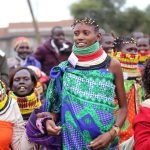
Thank you for journeying with us through this story. As evening falls in Kitelakapel, the sounds of life shift. Goats return home. Children’s voices echo from huts as they prepare for the night. Lights flicker in the school, where boys study long into the evening. A motorbike hum by and from a distant home, laughter and music rise, perhaps a celebration. Girls twirl in their traditional lorwa skirts under the stars. And above it all, a sky full of stars blankets this land, reminding us that even in the most forgotten places, God is here, tender and present. The “most abandoned” by society are, indeed, the most beloved by Him.
Contact and Support
Would you like to connect with us or support our mission in Kitelakapel? We would love to hear from you!
Contact Information:
Phone / WhatsApp: +254 722 791544 (Mukami, CLM Kenya Coordinator) Email: clmkitelakapel@gmail.com
Facebook: Comboni Lay Missionaries Kenya
To Support Our Work:
You can donate through the following Pay-bill Number:
• Paybill: 413 6003
• Account: donation (Please specify if your support is for the CLM in general or the Kitelakapel community specifically.)